Many writers, journalists, artists, intellectuals, and academics of present-day from all corners of the world seesaw between intending to exercise the right to freedom of speech and fearing being punished or censored due to what they express. In most cases the latter overweighs and this double-bind mostly ends up with self-censorship which leads to hearing less critical voices in public. When people insist on sharing their ideas that challenge the power relations of the given political system, they might be sentenced to various penalties. At least 274 journalists, i.e., were behind the bars in late 2020, according to the Committee to Protect Journalists’ annual report. Human Rights Watch’s annual reports which indicate violations against freedom of expression country by country also unveil the ascending intolerance towards different voices.
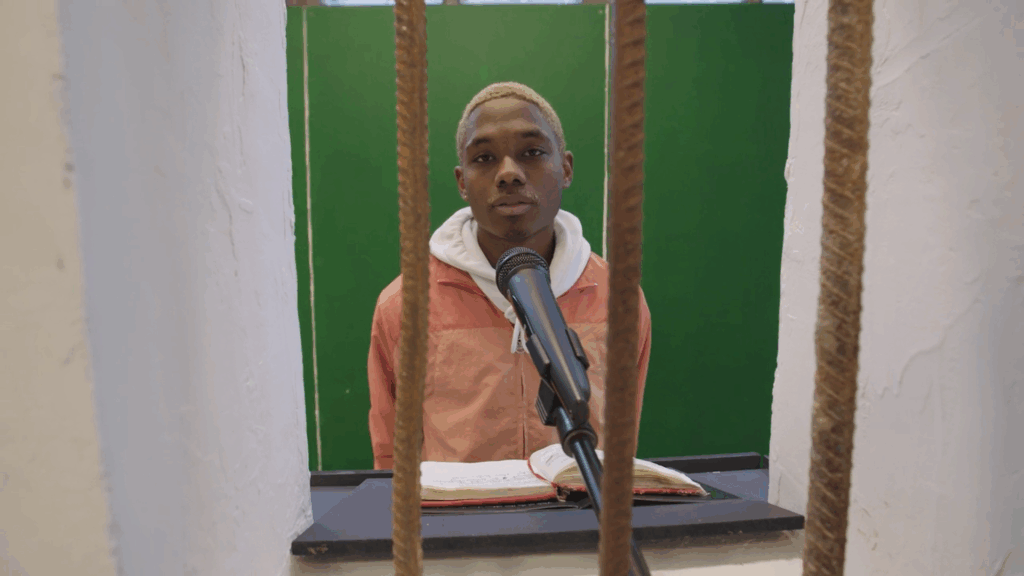
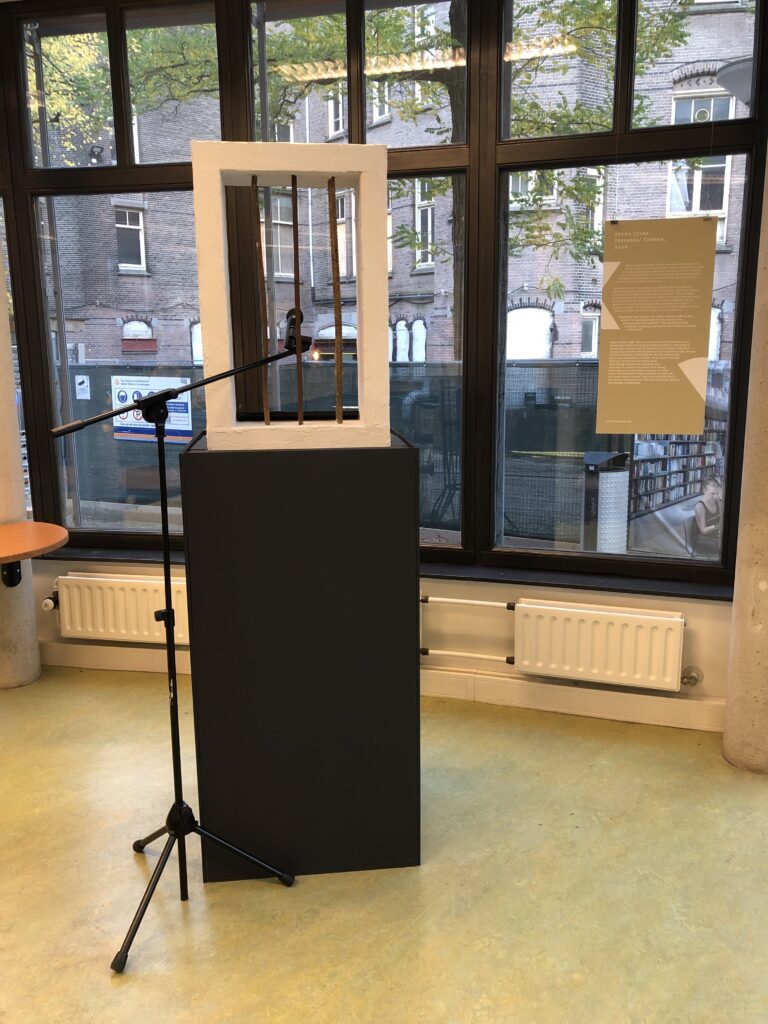
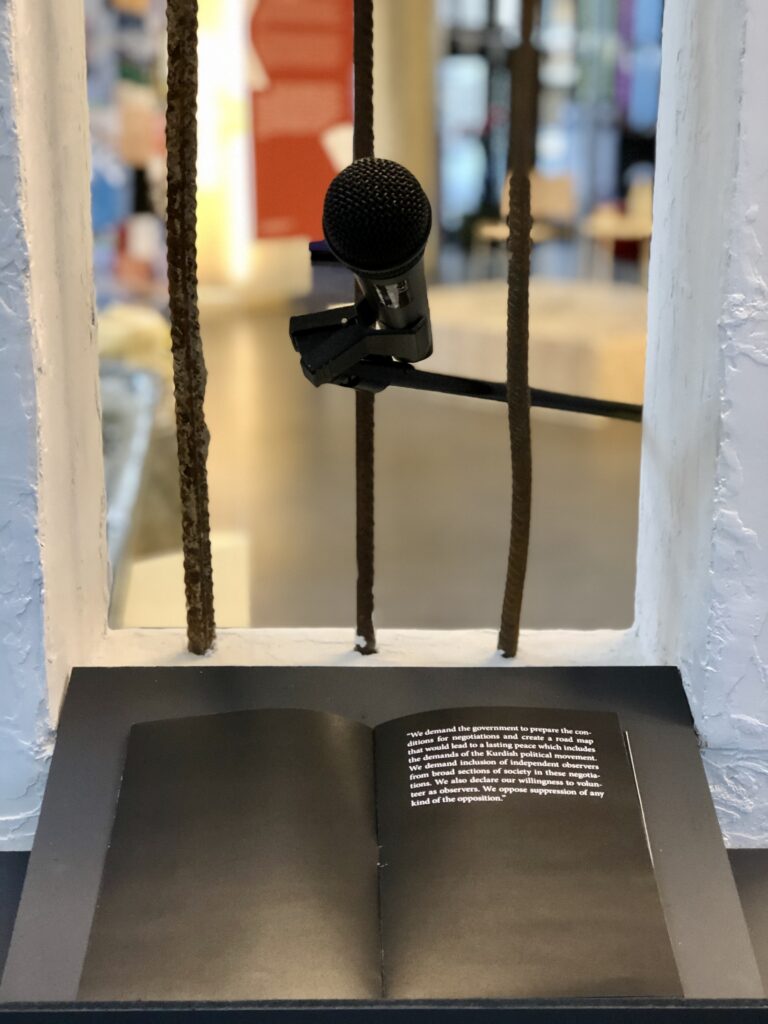
Speakers’ Corner is a modifiable installation that transforms the relationship between the speaker and audience in a meeting and draws attention to the difficulty of sustaining the freedom of speech. It consists of a few bricks and bars that are installed on the speech desk to give an illusion of hearing the speaker behind the bars as if she/he was punished due to her / his speech. As part of the installation, a booklet of anonymous passages compiled from the speeches of people from all over the world who have been punished for exercising their freedom of expression is also placed on the desk. By this means, it is aimed to be in solidarity with the people who are sentenced to imprisonment because of exercising the right to freedom of expression and emphasize the value of criticism even under threat of pressure and punishment. Speakers’ Corner can be considered as a platform where people can perform their freedom of speech and feel to be behind the bars due to their actions, regardless of what they express.
This installation/performance was part of the exhibition Humanities Ever After in Vox-Pop (Amsterdam) in 2020, but due to the Covid-19 restrictions, the exhibition closed two times and was open for only a week.
“The Black female is assaulted in her tender years by all those common forces of nature at the same time that she is caught in the tripartite crossfire of masculine prejudice, white illogical hate and Black lack of power.
The fact that the adult American Negro female emerges a formidable character is often met with amazement, distaste and even belligerence. It is seldom accepted as an inevitable outcome of the struggle won by survivors and deserves respect if not enthusiastic acceptance.”
“Only on the thin ribbon along the coast, here and there at the mouths of the big rivers, on the most fertile of the alluvial grounds, does the red, white, and blue of the Dutch tricolor wave.
Red— “Look, mother,” the little white boy says in astonishment in Magdeleine Paz’s wonderful book Because I Am Black, “you see? The negroes have red blood too!”
White— The color of Crommelin’s peace treaties. And blue? The color of our tropical sky, at which we gaze up through the dark leaves of our trees, to read in the twinkling glow of the stars the promise of a new life?
No, it is the deep blue of the Atlantic Ocean, across which the slave ships carried their African prizes, their living merchandise, our parents and grandparents, to their new homeland Sranang”.